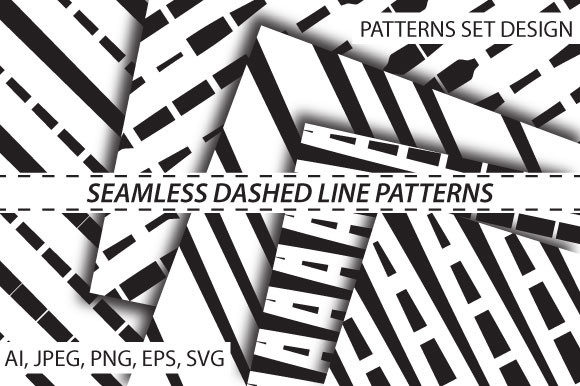
Seamless Dashed Line Patterns for Creative Designers
Seamless dashed line patterns offer a versatile and elegant solution for designers seeking to add structure and visual interest to their projects. These patterns, characterized by their geometric precision and minimalist aesthetic, are ideal for a wide range of applications, from digital design to physical print. Whether you're working on a wallpaper concept, a book cover, or a branding project, the use of dashed lines can elevate your design with a sense of order and movement.
The simplicity of these patterns makes them highly adaptable. A single dashed line can be manipulated into multiple variations, each offering a unique visual effect. This adaptability allows designers to experiment with different styles while maintaining a cohesive theme. The geometric nature of the pattern ensures that it remains relevant across various design trends, making it a timeless choice for both professional and personal projects.
Understanding the Characteristics of Seamless Dashed Line Patterns
At the core of seamless dashed line patterns is the repetition of dashes and spaces, creating a continuous line that flows without interruption. This technique is particularly effective in generating a sense of rhythm and continuity. The consistency of the pattern ensures that it can be applied across large surfaces without visible seams, making it ideal for backgrounds, borders, and decorative elements.
One of the key features of these patterns is their ability to work well with simple color schemes. The minimalistic approach allows the pattern itself to take center stage, while the colors serve as a subtle complement. This makes the design accessible to a broad audience, including those who prefer clean and uncluttered aesthetics. Additionally, the use of high-quality file formats ensures that the pattern maintains its integrity regardless of the scale at which it is used.
Applications of Seamless Dashed Line Patterns
Seamless dashed line patterns find practical use in numerous design scenarios. For instance, they can be employed as wallpaper for both digital and physical spaces. In a home setting, these patterns can add a touch of sophistication to walls, while in a digital context, they can serve as background elements for websites, apps, and presentations. Their versatility makes them suitable for both modern and traditional interiors.
In the realm of print design, these patterns are valuable for creating book covers, packaging, and promotional materials. The clean lines and geometric form make them an excellent choice for branding, as they convey a sense of professionalism and clarity. Moreover, the availability of multiple file formats ensures that the pattern can be easily integrated into various design workflows.
For educators and students, these patterns can be used as teaching tools to explore concepts such as symmetry, repetition, and spatial relationships. They provide a tangible way to understand how simple elements can create complex visual effects. This educational value extends to research and development, where the patterns can be studied for their structural properties and potential applications.
Advantages of Using Seamless Dashed Line Patterns
One of the primary advantages of using seamless dashed line patterns is their ease of integration into existing design systems. Because they are based on a consistent structure, they can be scaled, rotated, or modified without losing their visual coherence. This flexibility is particularly beneficial for designers who need to maintain a unified look across multiple projects.
Another benefit is the ability to customize the pattern to suit specific needs. Whether adjusting the spacing between dashes, altering the thickness of the lines, or changing the color scheme, the pattern can be tailored to fit the desired outcome. This level of customization ensures that the design remains unique and aligned with the project's requirements.
Additionally, the high-quality output of these patterns ensures that they maintain their clarity and sharpness at any size. This is especially important for print applications, where low-resolution images can lead to poor results. By providing files in multiple formats, including JPEG, PNG, EPS, SVG, and AI, the pattern can be used across different platforms and mediums without compromising quality.
Considerations When Working With Seamless Dashed Line Patterns
While seamless dashed line patterns are highly versatile, there are some considerations to keep in mind when incorporating them into a design. One such consideration is the balance between the pattern and other design elements. Overuse of the pattern can lead to visual clutter, so it's important to use it strategically to enhance rather than overwhelm the composition.
Another factor to consider is the context in which the pattern will be used. For example, a pattern that works well on a digital screen may not translate effectively to a printed medium due to differences in resolution and color reproduction. Understanding these nuances can help ensure that the final result meets the intended purpose.
Lastly, it's essential to respect the licensing and usage rights associated with the pattern. While many patterns are available for commercial use, it's always advisable to verify the terms to avoid any potential issues. This is particularly important for designers who are working on projects with strict legal requirements.
Exploring the Potential of Seamless Dashed Line Patterns
The potential of seamless dashed line patterns extends beyond their immediate visual appeal. As design trends evolve, these patterns can be reinterpreted and adapted to reflect new artistic directions. For instance, combining dashed lines with other geometric shapes or integrating them into more complex compositions can yield innovative and visually striking results.
Furthermore, the simplicity of the pattern allows for experimentation with different textures and materials. When used in print, the texture of the paper can interact with the pattern to create a tactile experience that enhances the overall design. This interplay between visual and physical elements adds another layer of depth to the creative process.
As technology advances, the possibilities for using these patterns continue to expand. Digital tools and software now offer greater control over the creation and manipulation of patterns, enabling designers to push the boundaries of what is possible. This ongoing evolution ensures that seamless dashed line patterns remain a relevant and dynamic resource for creative professionals.
By understanding the characteristics, applications, and considerations of seamless dashed line patterns, designers can harness their potential to enhance their work. Whether used as a standalone element or integrated into a larger design, these patterns offer a powerful tool for expressing creativity and achieving visual harmony.